Depending on the purpose of use, method of use, soil, etc.Powder type and granular typeYou can choose from
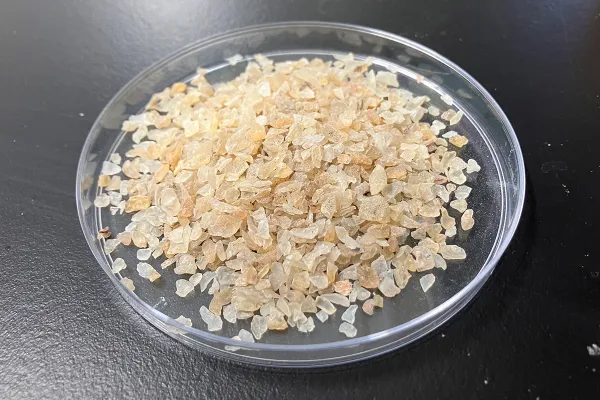
・Open-field farming (fields)
・Mixes uniformly even at low application rates
・Mixes well with pellets and fertilizers (similar particle size)
・Easy to incorporate into moist soils
・Particle size: 3–4 mm
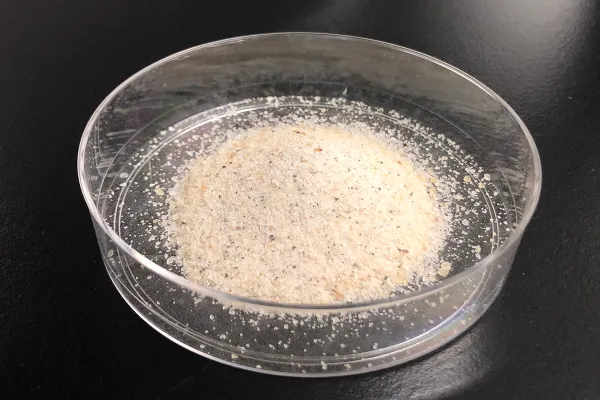
・Planters
・Seedling raising
・Sowing
・Easy to mix evenly, even with small volumes of soil
・Can be mixed with seeds for direct sowing
・Particle size: 100 μm–2 mm
* Important notes
• Mix in, don’t surface-apply. EF Polymer will not move down if broadcast on the surface. Mix it into the soil so it sits in the crop’s root zone. Planting can be done immediately after incorporation.
• Work with dry soil. Before mixing, make sure the field/soil is dry. If the soil is moist, the polymer won’t distribute evenly.
• Keep the product dry during application. Avoid any contact with water before incorporation. Spread and mix EF Polymer while it is dry.
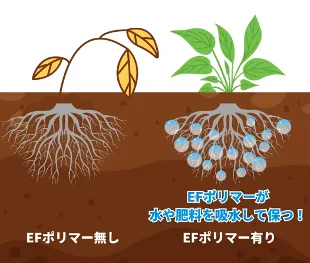
① Mix in, don’t surface-apply
EF Polymer will not move down if broadcast on the surface. Mix it into the soil so it sits in the crop’s root zone. Planting can be done immediately after incorporation
② Work with dry soil
Before mixing, make sure the field/soil is dry. If the soil is moist, the polymer won’t distribute evenly.
③ Keep the product dry during application
Avoid any contact with water before incorporation. Spread and mix EF Polymer while it is dry.
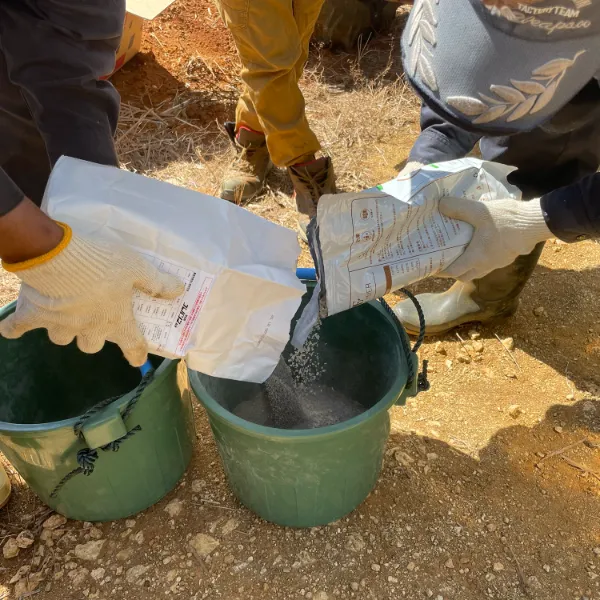

• Recommended application rate
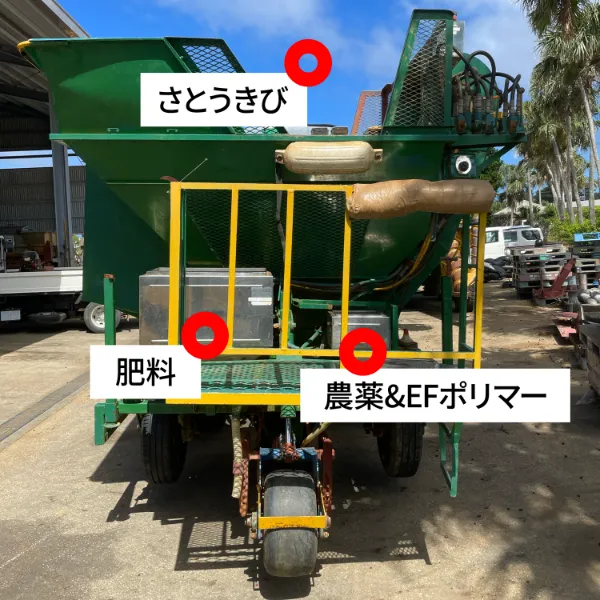
Because the usage rate is small (2–5 kg per 1,000 m² [10 ares, “10a”]), it’s efficient to premix EF Polymer with existing materials and apply them together.
Example: In sugarcane, EF Polymer can be applied together with granular pesticides or fertilizers.
• Bulk density caution
If the materials differ greatly in bulk density or particle size, the mix may separate during blending or application. To reduce segregation, pre-blend in small batches, choose similar particle sizes when possible, and keep the mixture gently agitated while spreading.
Recommended rate: 2 kg per 1,000 m² (10 ares, “10a”)
Example: For 5 kg of soybean seed per 10a, mix with 2 kg of EF Polymer.
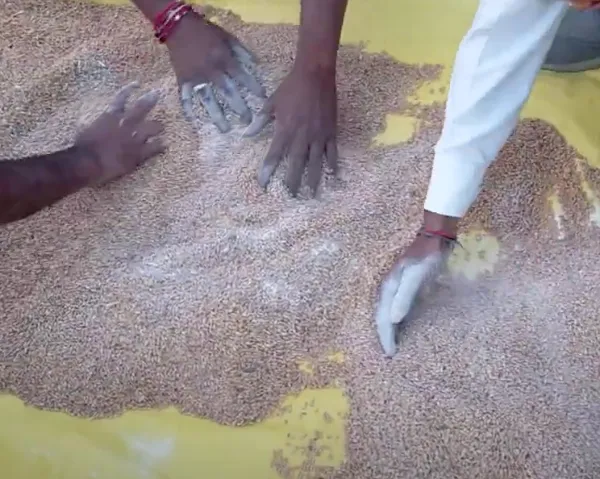
Mix the seeds with EF polymers
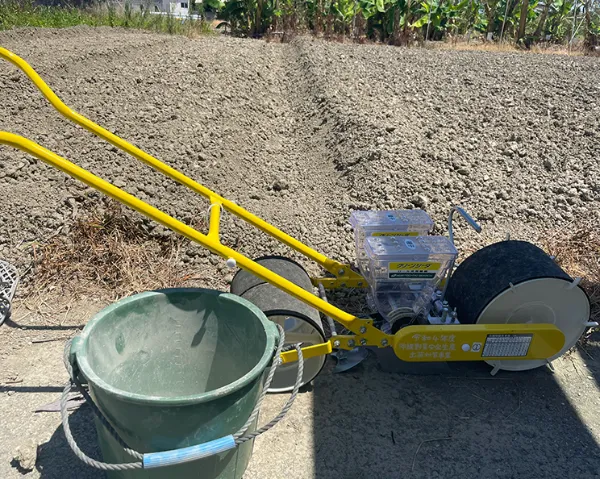

Transfer the mixture to the seeder and sow as usual.
Note: The rate above is a guideline. Adjust by crop, seeding method, soil, and growing conditions. If this is your first time, test on a small area before full application.
Recommended rate: Nursery soil 0.5–5 g/L; Planters 1–5 g/L; Plug trays 0.5–3 g/L
目安:1~5 g / L
・Mix EF Polymer into nursery or potting soil at the rate above.
Example: For 10 L of soil at 1 g/L, add 10 g of EF Polymer.
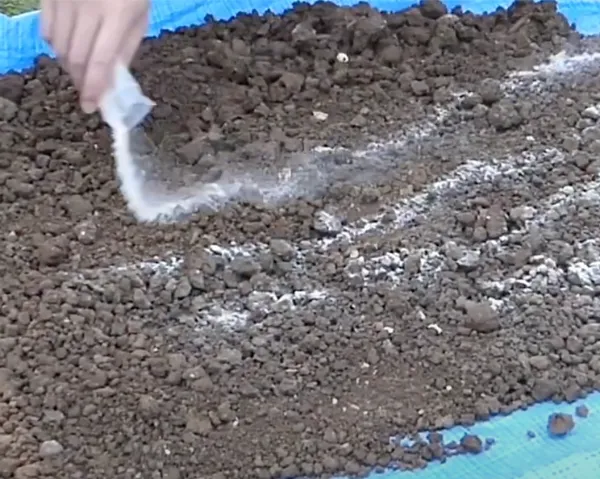
Sprinkle EF Polymer over the soil
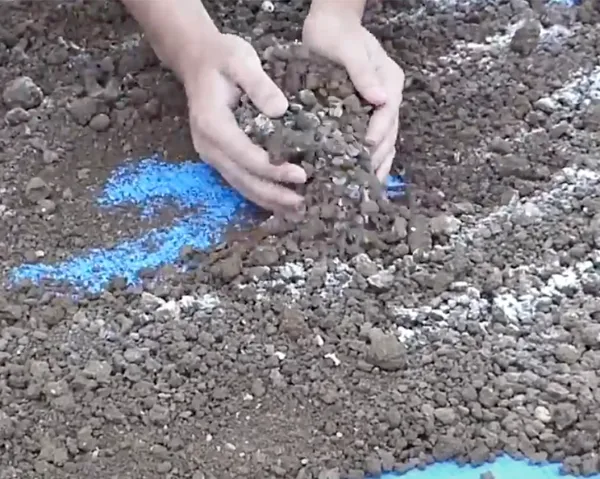
Mix thoroughly for even distribution
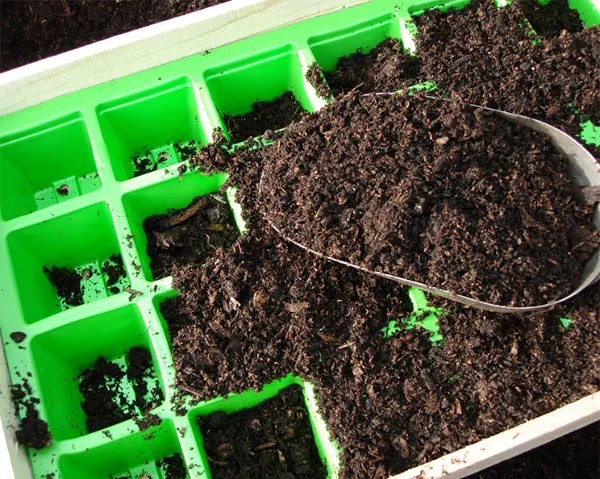
Fill seed trays or planters and use as usual.
Notes:
• Start on the low end (e.g., 0.5–1 g/L) and adjust by crop, plant size, climate, soil, and irrigation method.
• Keep the product dry until mixing; pre-wetting can cause clumping and uneven distribution.
Recommended rate: 1–5 g per seedling
Example: At 3 g per seedling, the usage is about 3 kg per 1,000 seedlings (≈ 10 ares / 1,000 m²), and the material cost is about ¥6 per seedling (reference).
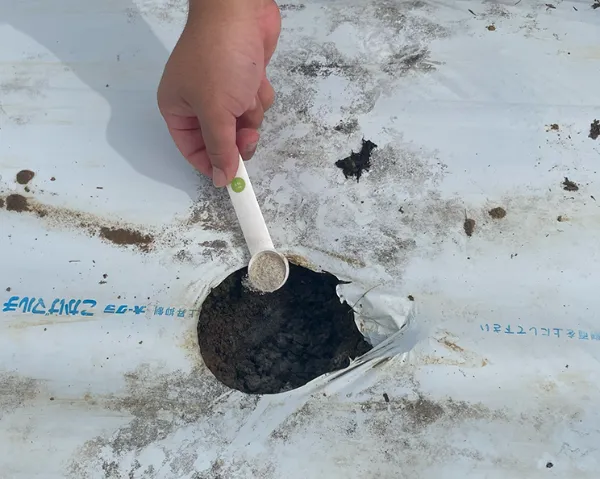
Put EF polymer into the planting hole
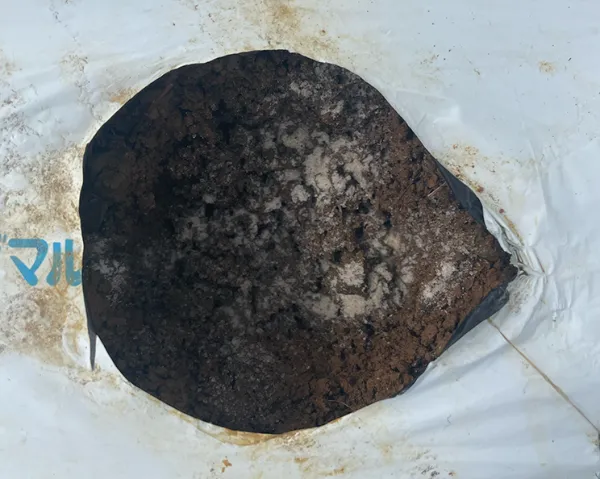
Stirring
*Note: The recommended amount may differ from this guideline depending on the purpose of use, crop, crop type, etc.
Recommended rate: 2–5 kg per 1,000 m² (10 ares, “10a”)
Example: At 2 kg/10a for carrots, apply about 50 g per 10 m of bed/ridge.

Apply EF Polymer along the ridges.
.webp)
Till the soil to incorporate it evenly.
・Watering can
・Granular spreader (granular applicator)
・Fertilizer and pesticide applicators (e.g., fertilizer spreaders, pesticide sprayers)
・Drone or helicopter (for large fields)
Note: The recommended amount may vary depending on the purpose, crop type, and growing conditions.
・Stronger root growth and establishment
・Improved tolerance to water stress
・Growth rate may increase or decrease depending on the crop and environment
・Even if early above-ground growth looks unchanged, enhanced root development can lead to a longer harvest window and improvements in later growth stages
Note: Outcomes vary by crop, soil, climate, and application rate.

Granular applicator or watering can
A fertilizer granular applicator or a watering can helps spread EF Polymer evenly across the soil.
Fertilizer/pesticide application equipment
Loading EF Polymer into a fertilizer or pesticide applicator allows even coverage over large areas with minimal effort.
Tip: Use equipment designed for powders/granules and calibrate the application rate before use.
Not recommended. For best results, incorporate EF Polymer into the soil so it sits in the root zone (about 5–10 cm deep). This allows it to supply water and nutrients directly to the crop.
No cases of root rot have been reported from EF Polymer itself. However, over-application can harden the soil as it dries, which may stress young roots. Please follow the recommended application rates and start with a small trial if you’re unsure.
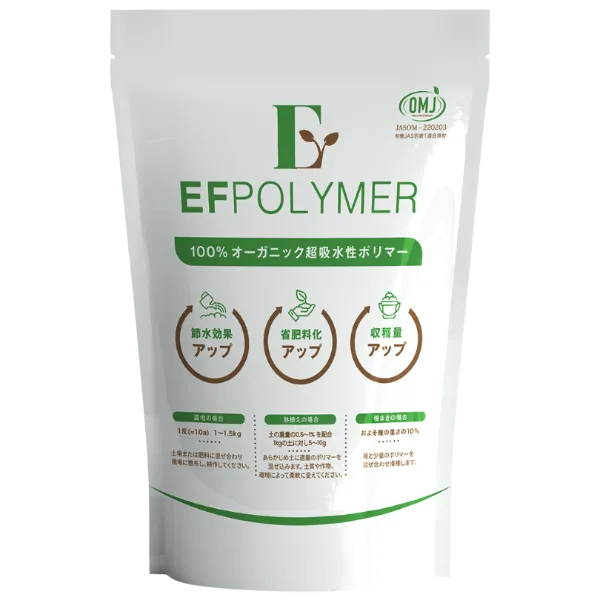
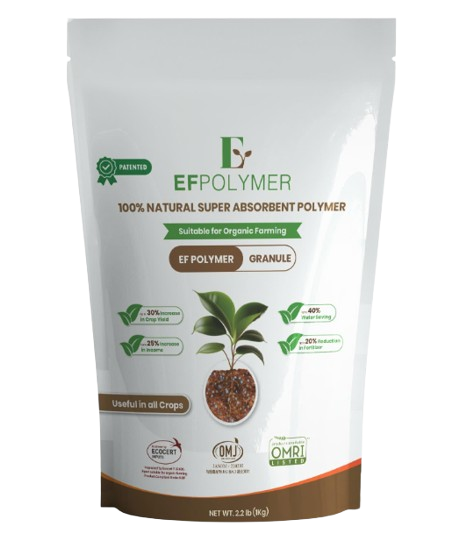
100% naturally-derived
Fully biodegradable