Announcements
Jul 01,2024
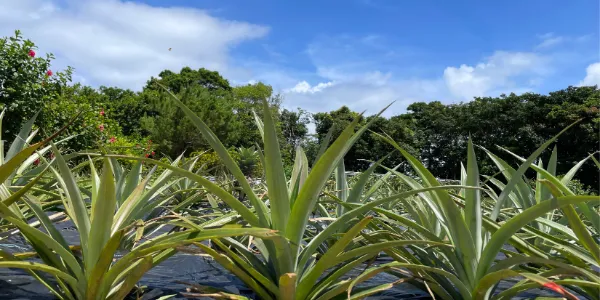
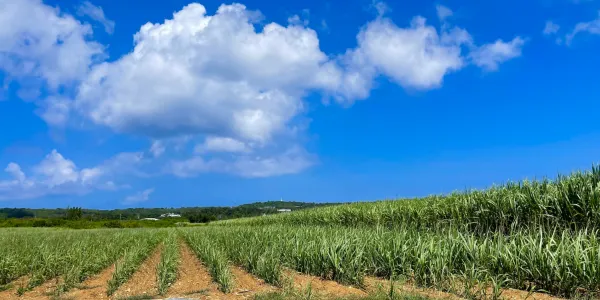
EF Polymer recently conducted a demonstration experiment in pineapple cultivation in cooperation with “Chura Sun Farm” in Motobu Town on the main island of Okinawa, and announced the progress along the way. When comparing test areas as a progress analysis where 3 months have passed since planting, there was a big difference in initial growth between the control area and the test area (polymer area) where polymer was mixed with soil.
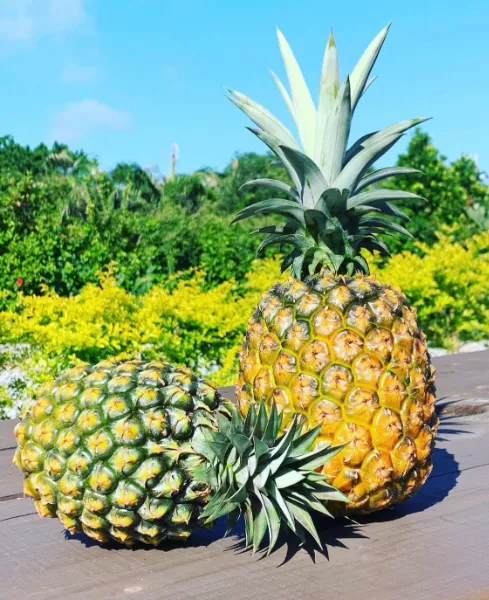
Picture courtesy of Chura Sun Farm
In this experiment, EF polymer was applied to farmland with an area of about 150 square meters in cultivation of the prefecture-grown pineapple variety “Gold Barrel.” Compared to other varieties, the gold barrel is a pineapple named because its fruit is large, yellow, cylindrical, and similar to a barrel. The cultivation method is difficult, and since it takes 2 and a half years or more to cultivate, it is considered a highly rare variety. Chura Sun Farm in Motobu Town, which has been cultivating gold barrels since 5 years ago, has continued efforts to reduce chemical fertilizers, and now EF polymers have been tested and introduced as part of this.
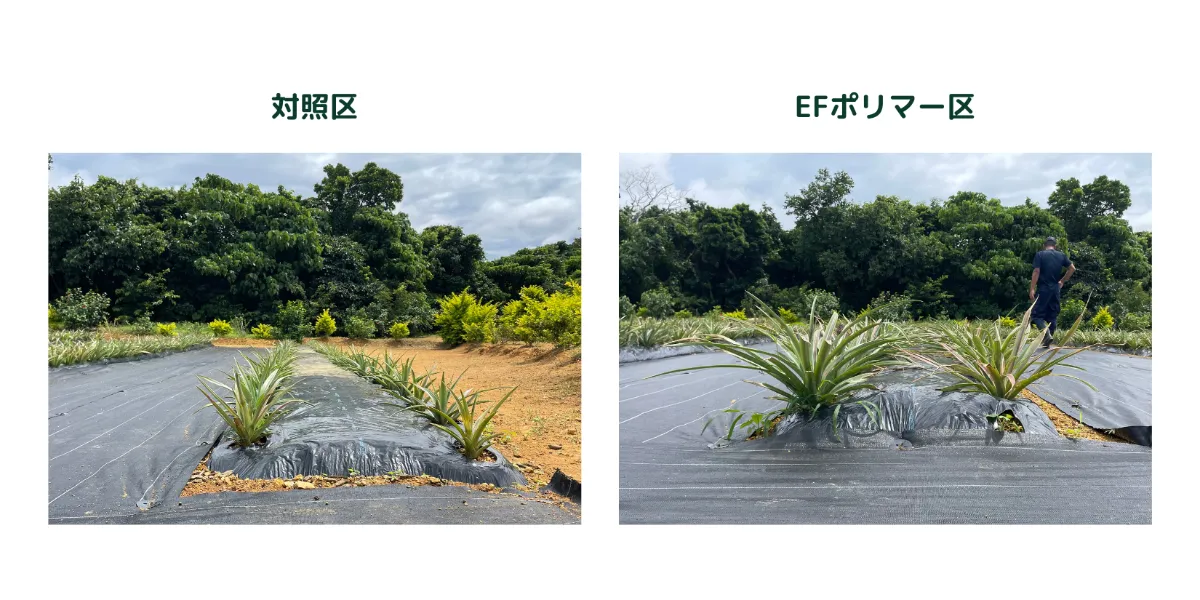
If you compare the control zone with the polymer region, you can see differences in leaf length and plant size.
Mr. Takeshi Shiroma, the representative of Chura Sun Farm“The size of a pineapple's leaves determines the size of the fruit that forms later. I'm very surprised at how fast the polymer district is growing this time.” I'll talk about it. “Pineapple is a plant in the cactus family, and while it is resistant to dryness, it has properties that are vulnerable to moisture. Therefore, core rot disease occurred every year during the rainy season, and it was plagued.”
“I knew that EF polymers retain water in the soil as a characteristic, but I was also a little uneasy about whether storing moisture in the soil would promote core rot. However, now that the rainy season is over, looking at the results, the number of rotten cores has rather decreased drastically. Until now, at Chura Sun Farm, 2 to 30 pineapples per rib have caused core rot disease, but in this test area, we were able to drastically improve the situation with less than 10 pineapples.”
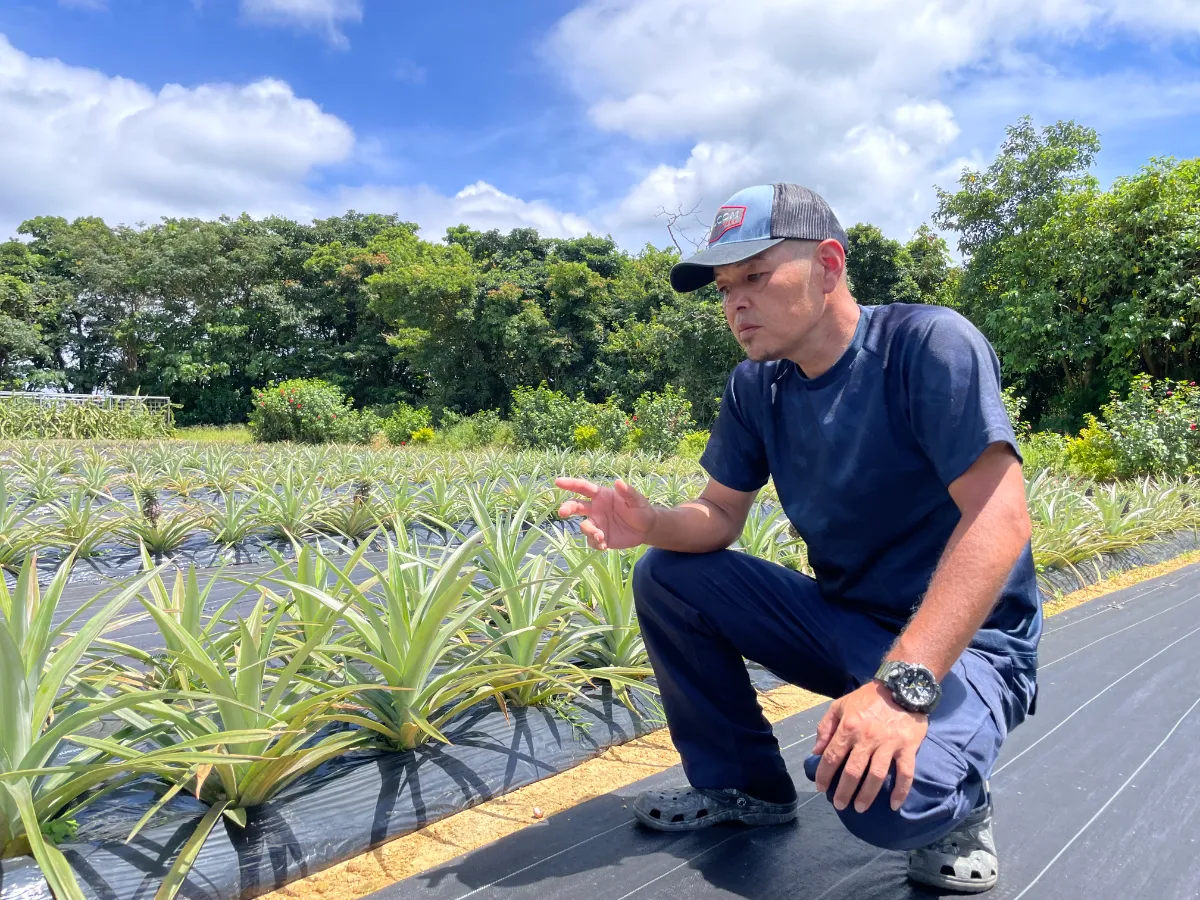
Who is Masaru Shimabukuro, who is in charge of sales at EF Polymer“Further analysis is needed on the effects of EF polymers in soil, but as a result of the polymer being able to properly maintain moisture in the soil, it is thought that it may have led to a decrease in core rot disease. Since similar trends can be seen in other crops such as carrots, it can be seen that polymers support crop growth even during periods of high rainfall.”
Mr. Shiroma of Chura Sun Farm said, “Districts that use polymers grow really fast. They were planted more than six months ago in the field next door, but now they have grown to almost the same height. If it grows well at this pace, it is likely to lead to a drastic reduction in the period until harvest, and I have high expectations.” I will continue. “Chura Sun Farm is working every day to establish tourism agriculture and eco-farms. Currently, we are continuing activities to reduce the amount of fertilizer used by 30% for eco-farm certification, and we would like to make it farmland that can obtain organic JAS certification in the future. Not only do we deliver cultivated pineapples, but we also want customers to actually enjoy harvesting on farmland, eat delicious pineapples, and go home.”
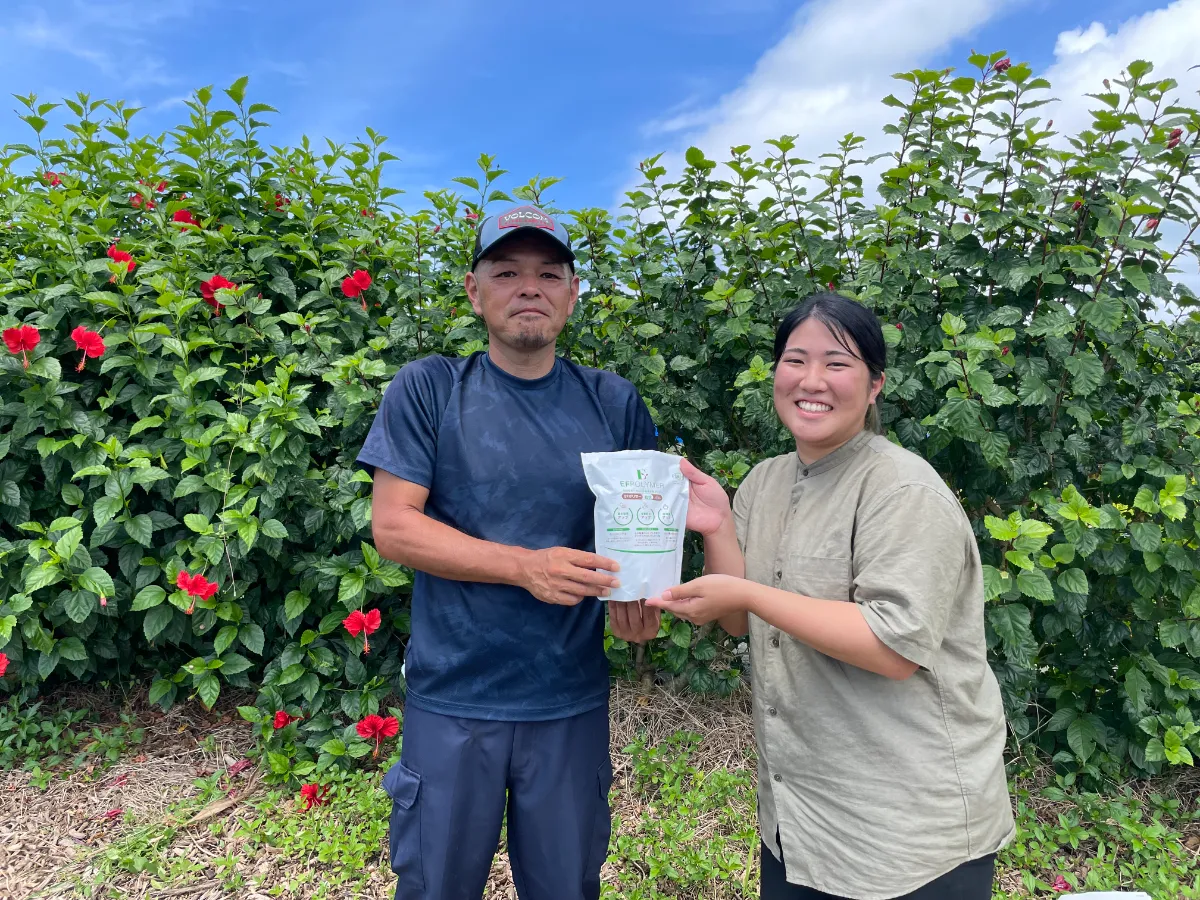
EF Polymer is looking for producers who can conduct demonstration tests of our products on farmland. If you are interestedPlease contact us.