Employee Interviews
Nov 20,2025
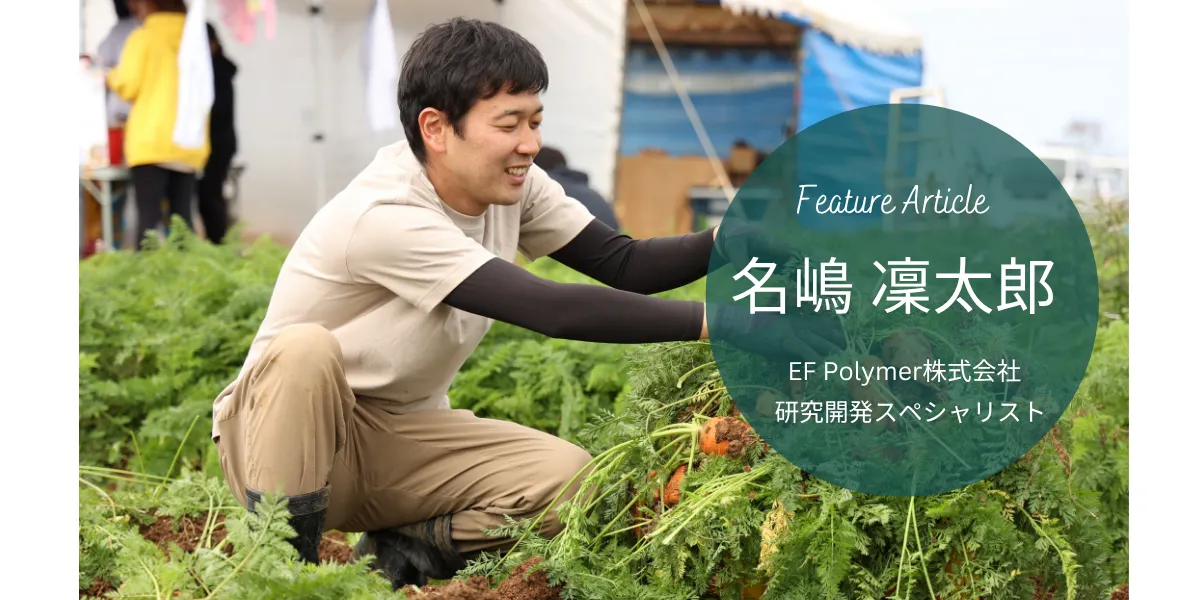
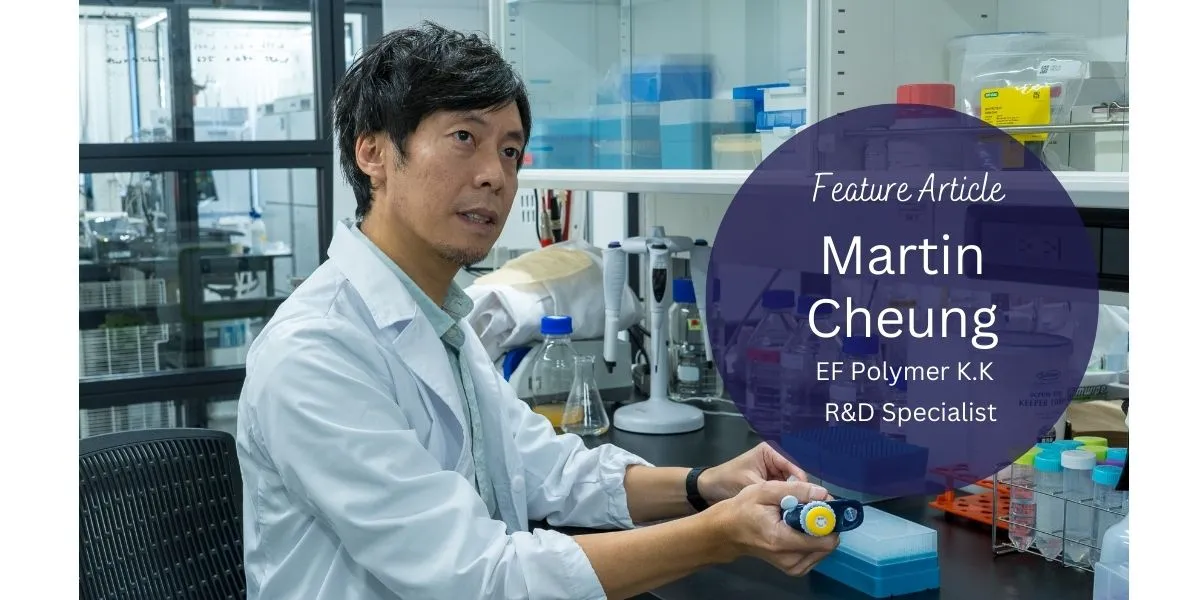
For the agricultural sector with EF polymersResearch and development (R&D)Mr. Rintaro Najima, who is responsible for, supports the technical foundation of the company through analysis of demonstration tests and specialized support from the sales team.
I have been interested in dryland agriculture since I was a student, and in my previous job, I experienced sales and cultivation guidance for biostimulants (ingredients that enhance the natural protective power of plants). In thinking about the future of agriculture, I learned about the existence of EF Polymer, strongly sympathized with the business, and decided to move to Okinawa and join the company in 2024/1.
In this article, we asked Mr. Najima about his motivations with EF Polymer and who he would like to be friends with in the future.

Mr. Najima:
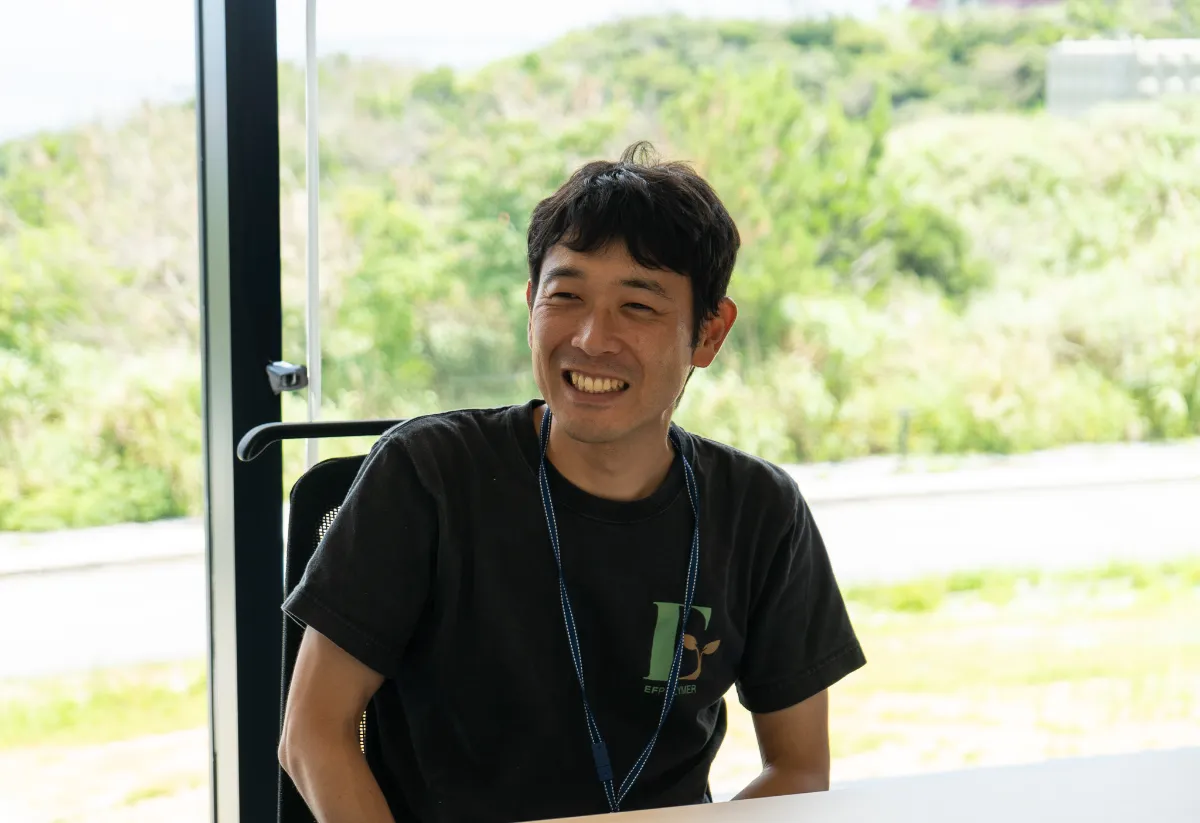
I'm from Kanagawa Prefecture, and I majored in plant physiology at Tottori University Graduate School. After graduation, I got a job at a fertilizer manufacturer and was engaged in biostimulant sales and cultivation guidance.
HR team:
Can you tell me a little more about biostimulants?
Mr. Najima:
It is a field that is attracting attention in the agricultural industry, and it is a product in a different category from fertilizer and pesticides to raise the protective ability that plants originally possess.
It indicates microorganisms, organic matter, etc. that work on plants and soil, improve the physiological state of plants, and promote healthy growth. It is useful for improving stress resistance and improving yield and quality.
In my previous job, I supported implementation while being involved with farmers not only in Japan but also in Thailand.
Mr. Najima:
I've been interested in dryland farming since I was in college. While I was involved in agriculture in my previous job, I strongly felt that no matter what materials were used, the essential issue was still “water.” While on-site cultivation is becoming increasingly difficult due to the effects of climate change, I learned about the existence of EF polymers. I read the blog and official website, and I was moved by both the product and the vision.
HR team:
It wasn't someone's introduction; you applied yourself!
Mr. Najima:
Yes, I did my own research and applied. There may be many referrals when changing research jobs, but I think there are people like me who strongly sympathize with the vision and make decisions.
Mr. Najima:
It has three main roles.
The first one isTechnical support for sales teams and customersThat's it. From farmers, “How should I use it under these conditions?” When there are specific consultations such as these, we receive consultations from the sales team and make technical interpretations and proposals.
The second one isAcademic analysis of demonstration experimentsThat's it. When using EF Polymers and getting good results, “Why was that good?” I will unravel it scientifically. For example, while cooperating with university professors who are familiar with the movement of water in soil, it has been prepared so that it can also be used for sales materials, such as visualizing water retention and quantifying how resistant plants are to wilt.
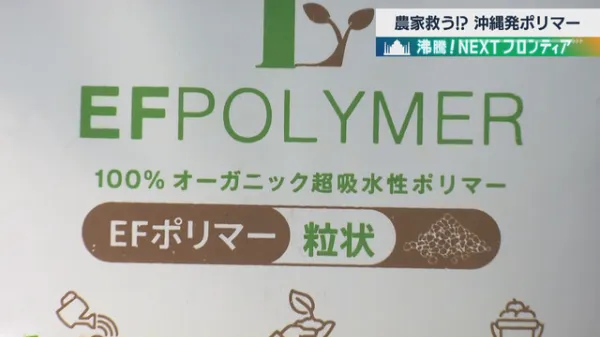
The third is an improvement proposal for the product itself. In addition to being powdered, the current EF polymers have a slightly lumpy shape, but for example, there are cases where round shapes are easier to spray with agricultural machinery. Reflecting such user perspectives, we are also working on combining shape, feeling of use, and even fertilizer and BS materials such as fertilizer and biostimulants.
Mr. Najima:
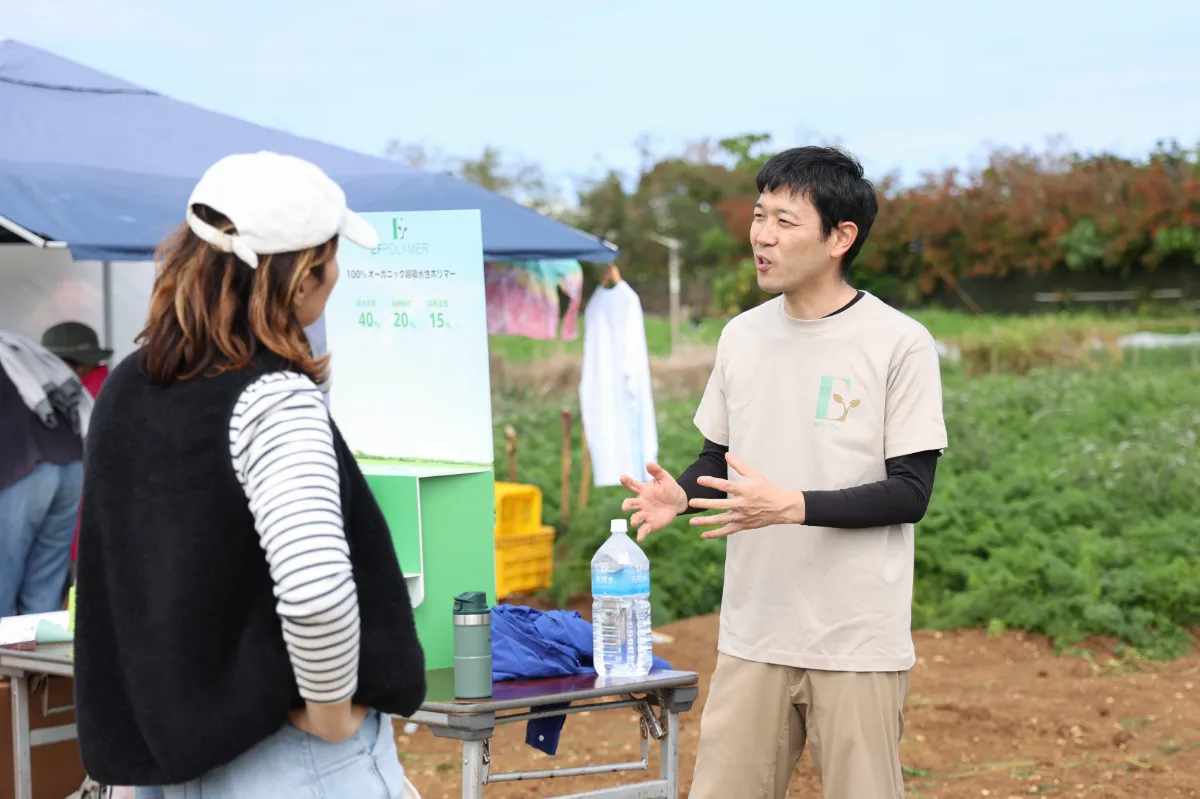
It's a research analysis of ②. What we do as EF polymersUnique research on naturally derived materialsWhat is it. Conventionally, there has been a lot of research on petroleum-derived materials, but until now, even major companies have not been able to realize things that are naturally derived and have received organic certification, such as our products. I think there is great value leading to the next development of organic farming materials.
HR team:
Other team members similarly talked about how rewarding it is to be involved in their own research.
Mr. Najima:
Yes. For myself, having a child made me feel more deeply. The world's population continues to increase, and in Japan, the agricultural population is declining, and most agricultural materials are imported.
In my previous job, I was keenly aware that there are no raw materials for fertilizer in Japan.I wonder if a food war will break out at this rate... Amidst such a sense of crisis, I strongly feel that it is necessary to leave the “origin of food” for the next generation.”
Mr. Najima:
After all, most of the communication within the team is in English, so that's a challenge. Due to the language barrier, I try to avoid putting communication on the back burner.
I study every day using an English learning app. It also took me a while to get used to the differences in intonation and the unique wording.
HR team:
In addition to everyday research, you're also studying English...!
Mr. Najima:
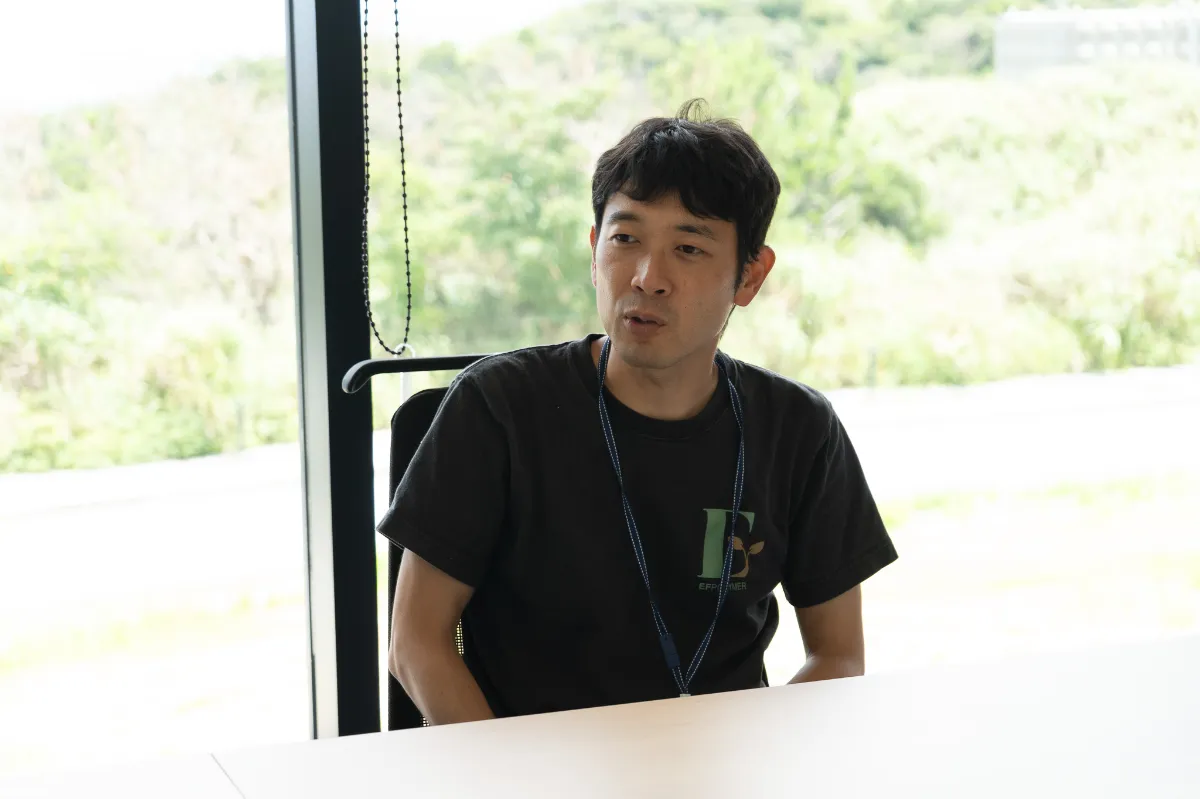
Those who have English proficiency are reassuring, but more than thatInterest in agricultureI think that's the premise. Speaking of agriculture in a nutshell, there are a wide range of fields such as plant physiology, soil science, microbiology, agricultural economics, etc., but I think it is particularly compatible with our efforts if you are interested in plants and soil.
Also, as was the case with myself, people with work experience other than research, such as sales, are also valuable to the team.
Mr. Najima:
The current R&D team consists of a small number of elite employees, but I would like to further expand the system in the future. However, even if the number of people increases,A relationship where you can communicate closelyI want to maintain it. I would like to create an environment where it is easy to consult and report, and an atmosphere where ideas are born naturally.
HR team:
Because EF Polymer is a startup and has separate bases in India, Japan, the US, and Europe, careful communication on a daily basis is important.
Mr. Najima:
I really think so. andDissemination for each personIt's also important. EF Polymer's products are great, but they're not “magic powders.” That's why we need a multifaceted approach.
The company's recognition of “utilization of limited resources” and “sustainability” is meaningful only when it is embodied not only in products, but also by those of us who work there.
I think people are required to communicate this themselves in their daily work.
“EF Polymers is a company with extremely important technologies that are deeply involved in global agriculture and food issues. I'm looking forward to meeting and working with people who are interested in such fields.
It's a startup, so it can be tough. That's why I want to help each other as a team to overcome it.”
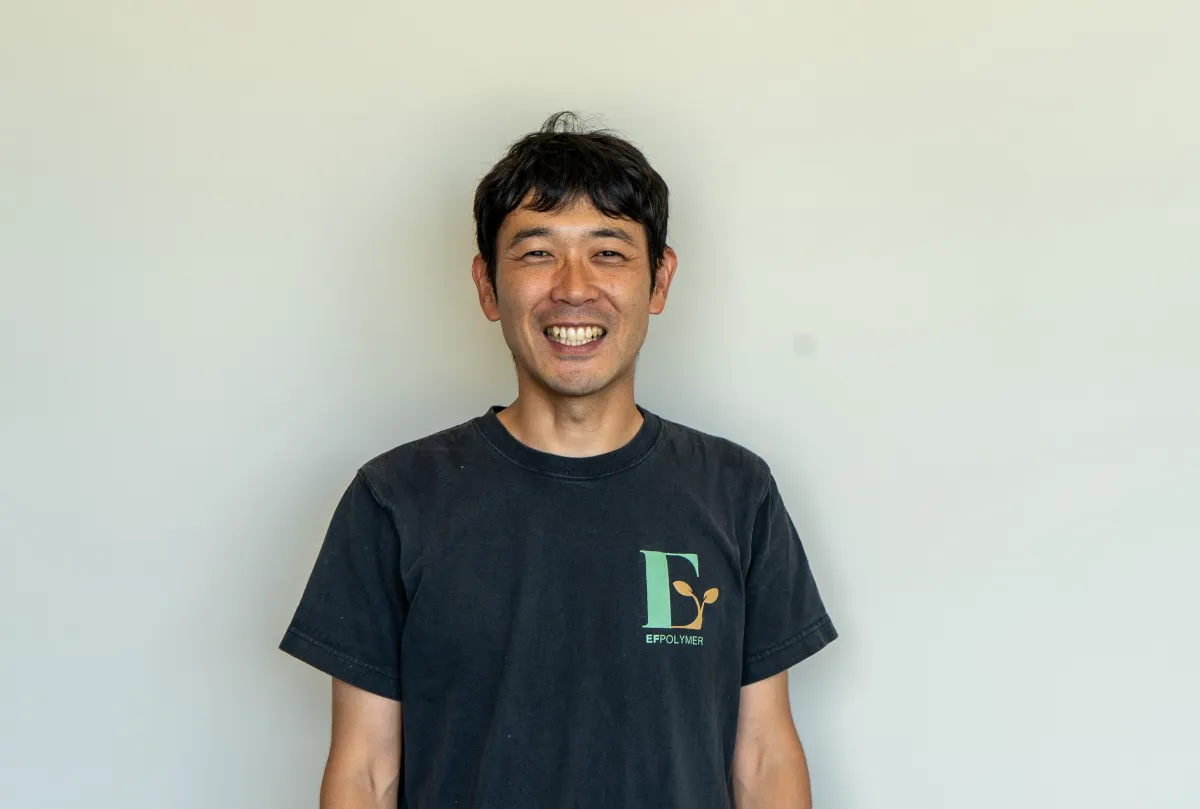
Najima has a gentle voice, but what I saw from the interview was her ability to act to decide to move to Okinawa on her own, and her strong belief that she wants to support the future of “water and food.”
The phrase “quiet fighting spirit” is perfect for taking on the challenge of research on unique organic materials. When it came to talking about plants and research, their expressions brightened up, and they talked vividly.
On their days off, they enjoy visiting cafes while driving with their kids, and it seems that they are devoting themselves to their daily work while taking care of their families.
Here are our current job openings:
https://efpolymer.jp/recruit/position