Announcements
.png)
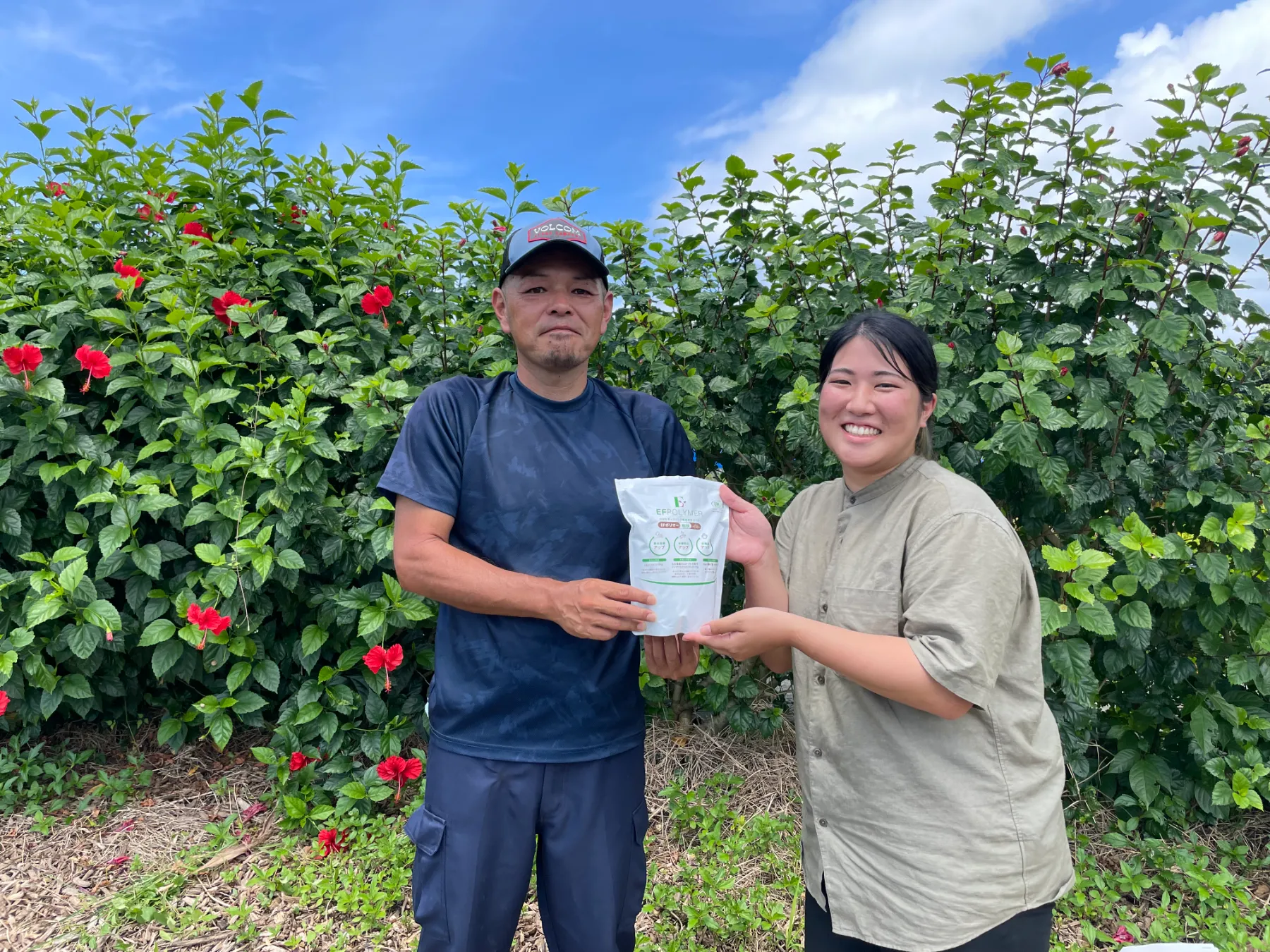
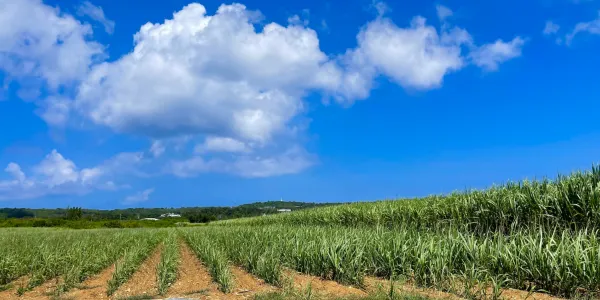
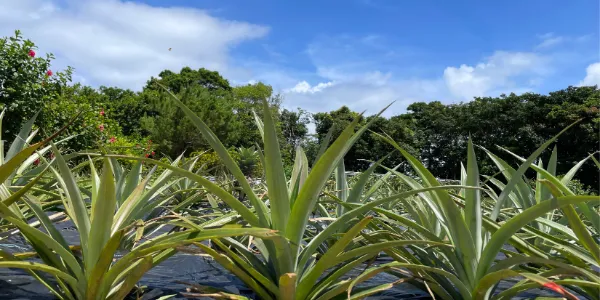
EF Polymer has conducted a field trial in collaboration with Chura SUN Farm in Motobu Town, Okinawa, to evaluate its effectiveness in pineapple cultivation. The company has now released interim results from the trial.
After three months from planting, a comparative analysis between the control plot and the EF Polymer-treated plot (where the polymer was mixed into the soil) revealed significant differences in early stage growth.
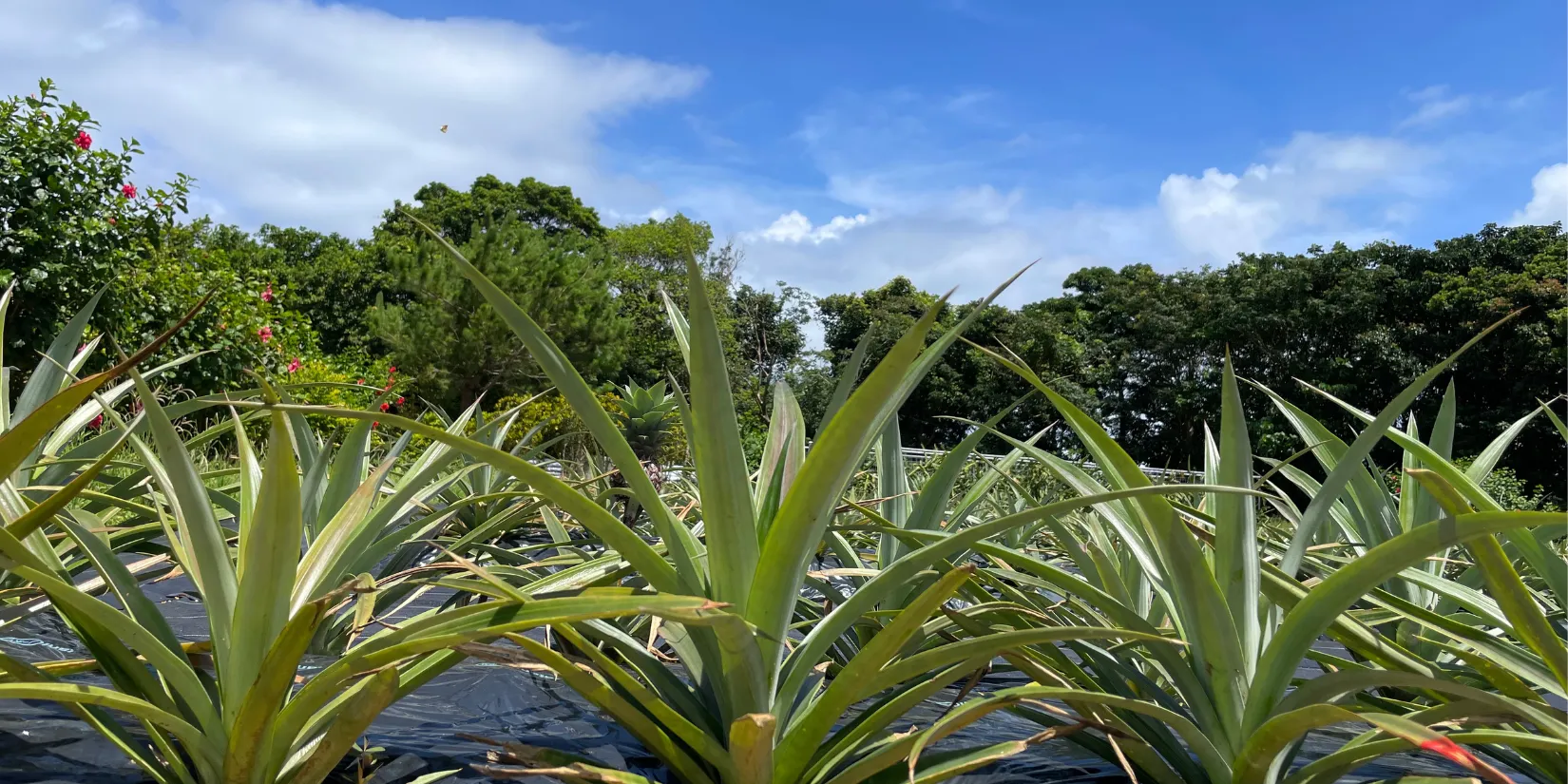
The trial was carried out on approximately 150 tsubo (about 500 square meters) of farmland using the Okinawan pineapple variety “Gold Barrel.”
Gold Barrel pineapples are known for their large, cylindrical, bright yellow fruits resembling a barrel, which is the origin of their name. Due to their complex cultivation process and long growing period of over two and a half years, they are considered a rare and premium variety.
Chura SUN Farm, which has been cultivating Gold Barrel pineapples for the past five years, has been actively working to reduce the use of chemical fertilizers. As part of this effort, EF Polymer was introduced on a trial basis.
Compared to the control plot, the polymer-treated plot showed clear improvements in leaf length and overall plant size.

Takeshi Shiroma, Representative of Chura SUN Farm, commented:
“The size of pineapple leaves determines the eventual size of the fruit. We were very surprised by how quickly the plants in the polymer-treated plot grew.”
He continued:
“Although pineapples are drought tolerant, they are sensitive to excess moisture. During the rainy season, we often face issues with core rot disease.”
“We knew EF Polymer could retain water in the soil, but we were initially concerned that it might worsen core rot by holding too much moisture. However, after the rainy season, we found the opposite result, the number of affected plants significantly decreased.”
Previously, the farm experienced 20 to 30 cases of core rot per row at its peak. In the EF Polymer treated plot, this number was reduced to fewer than 10 plants.

Yu Shimabukuro, Sales Representative at EF Polymer, added:
“Further analysis is needed to fully understand how EF Polymer behaves in the soil. However, we believe that its ability to maintain optimal moisture levels contributed to the reduction in core rot disease.”
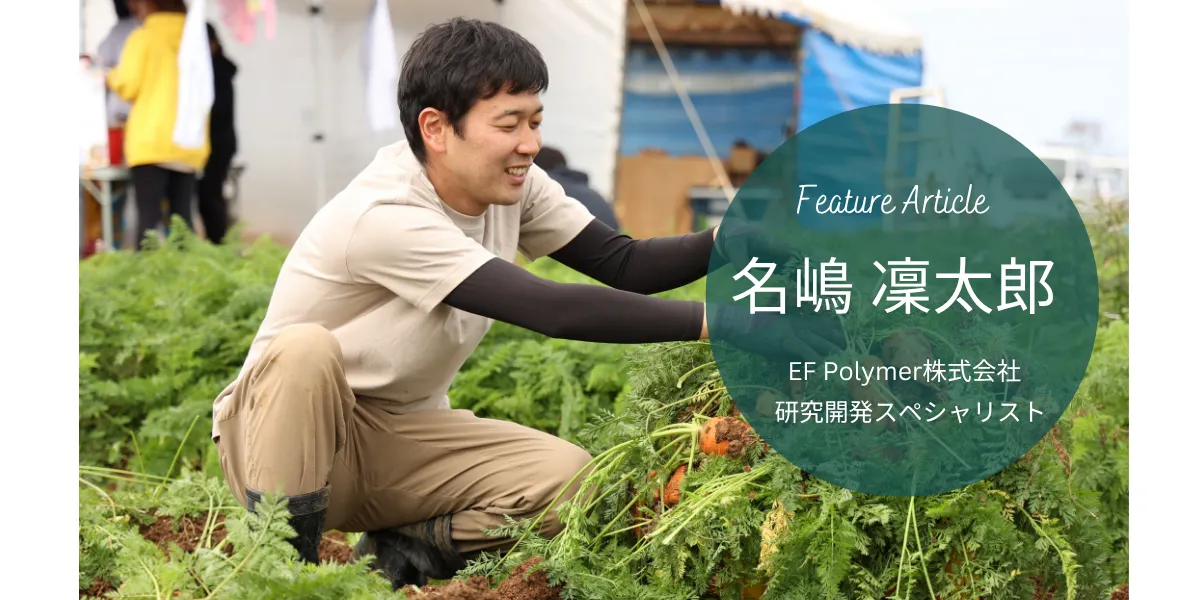
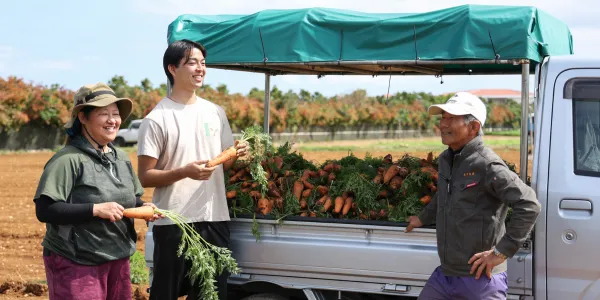
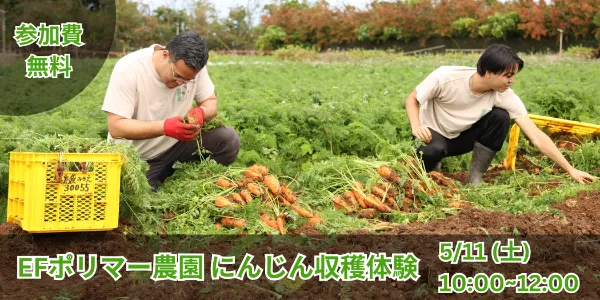
“We have observed similar trends in other crops such as carrots, indicating that the polymer can support plant growth even during periods of high rainfall.”
Shiroma also noted:
“The growth in the polymer-treated plot is remarkably fast. In a neighboring field, pineapples planted more than six months earlier have now reached almost the same height.”
“If this growth rate continues, it could significantly shorten the time required until harvest, which is very promising.”
Chura SUN Farm is working toward establishing both tourism-oriented agriculture and an eco-friendly farming model.
Currently, the farm is aiming to reduce fertilizer usage by 30% as part of its eco farm certification efforts, with a long-term goal of achieving organic JAS certification.
“We want visitors not only to enjoy our pineapples but also to experience harvesting them firsthand and taste their freshness on-site,” Shiroma shared.
EF Polymer is currently seeking farmers interested in conducting field trials using its products.
If you are interested, please feel free to contact us.