News Release
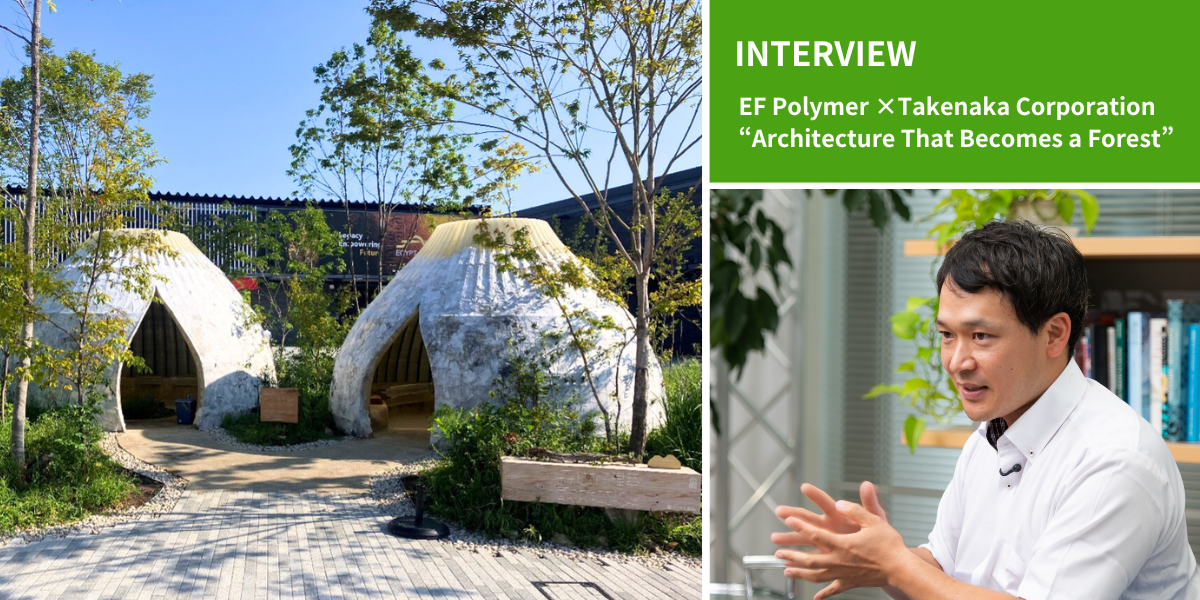
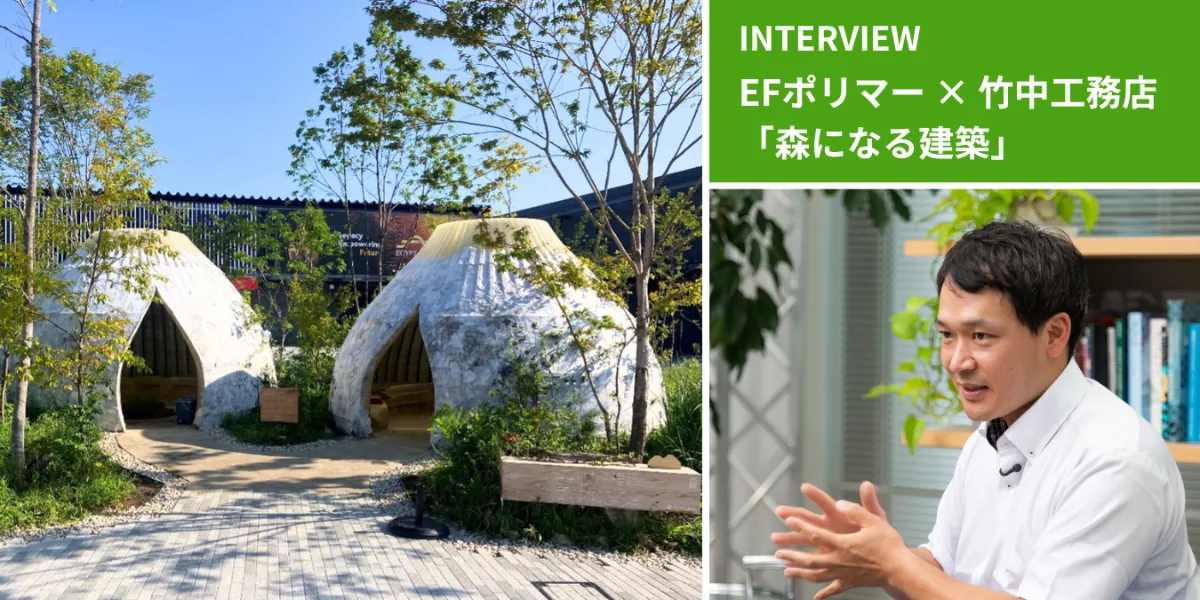
At the 2025 Osaka Kansai Expo, Takenaka Corporation unveiled an ambitious concept known as “Architecture That Becomes a Forest.”
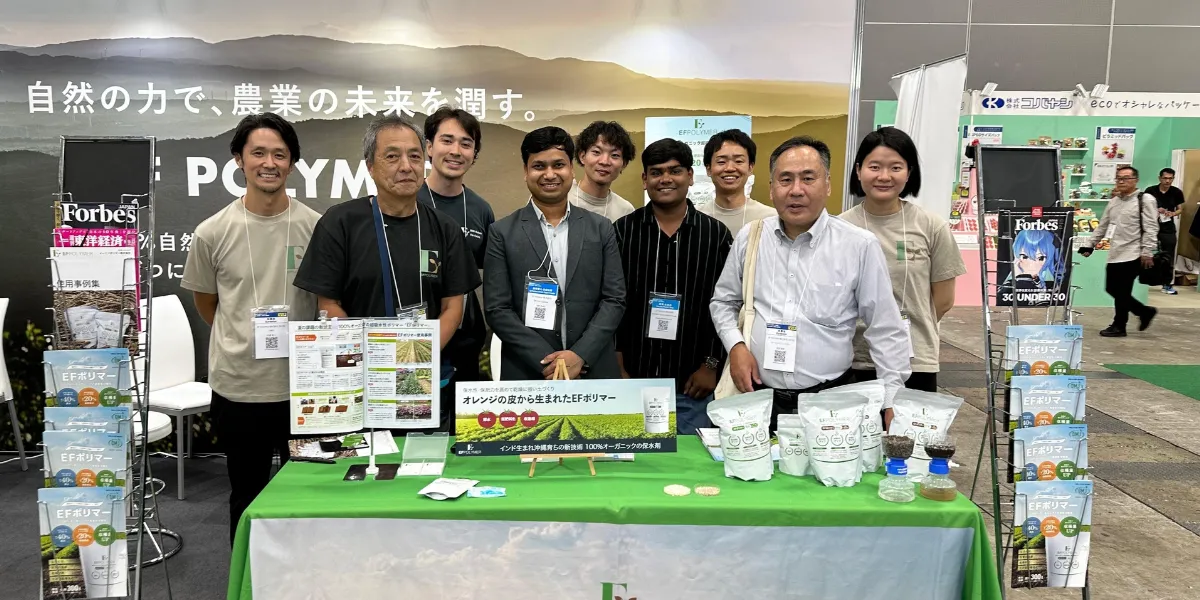
Rather than turning into waste after its role is fulfilled, the building is designed to eventually return to the soil and grow into a forest. Supporting this bold vision was EF Polymer, a 100% plant based, biodegradable water retention material.
In 2019, Takenaka Corporation launched an internal design competition with the 2025 Osaka Kansai Expo in mind. The theme was simple yet profound: What is architecture for the future?
Participants were encouraged to think beyond construction technology, incorporating perspectives on society, the environment, and human relationships.
Among the proposals, a young team of architects presented the idea of “Architecture That Becomes a Forest.” Instead of the conventional cycle of demolition and rebuilding, the structure itself would eventually decompose, enrich the soil, and give rise to new greenery. The concept deeply resonated with the judges, leading Takenaka to realize it on the global stage of the Expo.
Joining the project was Ken Tsuchio, a researcher at Takenaka’s Technical Research Institute. Since 2011, Tsuchio has specialized in urban greening, landscaping, and ecosystem conservation, focusing on coexistence between architecture and nature.
His work spans rooftop and wall greening technologies, as well as scientific analysis of plant growth environments. He has also been actively involved in collaborations with startups, exploring how innovative materials like EF Polymer can be integrated into architectural practice.
Within the “Architecture That Becomes a Forest” project, Tsuchio was responsible for verifying greening technologies, including seed germination and drought resistance.
“When I first heard the concept, I thought it was wonderful but at the same time, almost impossible,” he recalls.
“One of the core ideas was to mix seeds into paper and attach it to the structure to grow plants. From a professional standpoint, expecting plants to take root on dry walls seemed extremely difficult.”
As development progressed, these concerns quickly became reality. The biggest challenge was moisture retention.
“Even if seeds embedded in seed paper sprouted, there was nowhere for the roots to grow, and they would quickly dry out,” Tsuchio explains.
“Yumeshima, the Expo site, has very little shade and is exposed to extreme summer heat. There was a constant risk that the plants would wither during the six-month exhibition period.”
Field experiments confirmed that water retention was critical. Soil could dry out within hours under strong sunlight, causing young sprouts to wilt. Frequent irrigation and repeated adjustments were necessary to keep the architecture “alive.”
“The pressure was immense,” Tsuchio admits.
“We were determined not to let it become ‘architecture that withers.’”
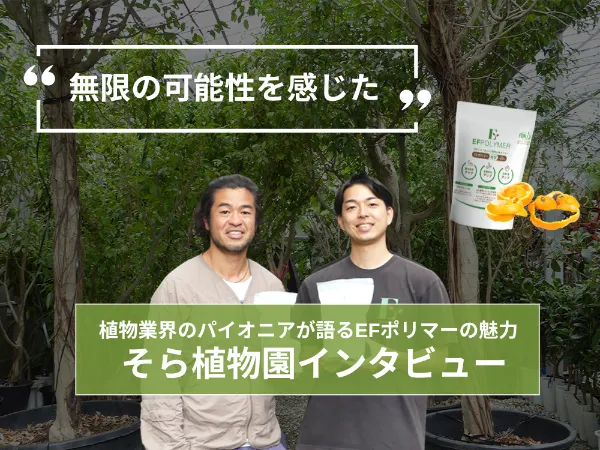
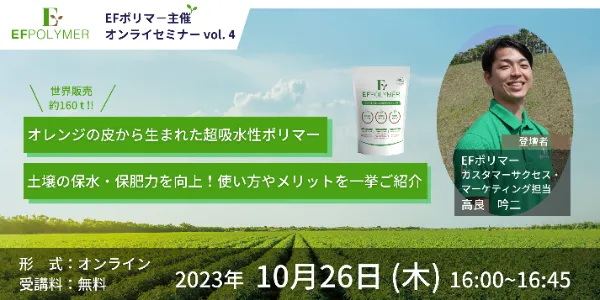
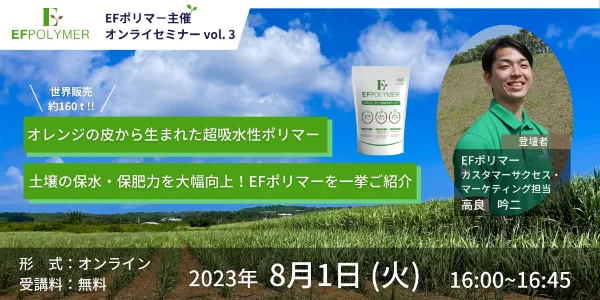
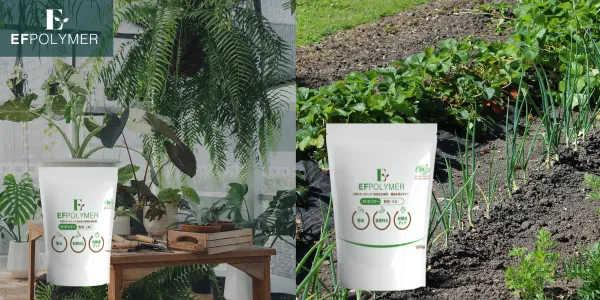
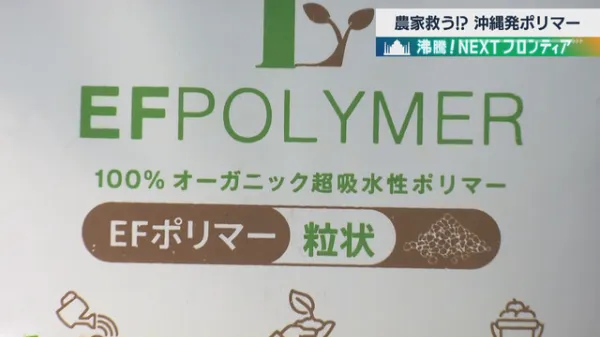
The breakthrough came with EF Polymer, a super absorbent polymer made entirely from agricultural by products such as orange and banana peels.
EF Polymer can absorb up to 50 times its own weight in water, repeatedly releasing moisture over a period of about six months. It fully biodegrades and returns to the soil within roughly a year.
“Petroleum based polymers eventually break down into microplastics, which makes them unsuitable for a project like this,” Tsuchio explains.
“EF Polymer, on the other hand, biodegrades completely and has excellent water holding capacity. It perfectly matched the philosophy of this project.”
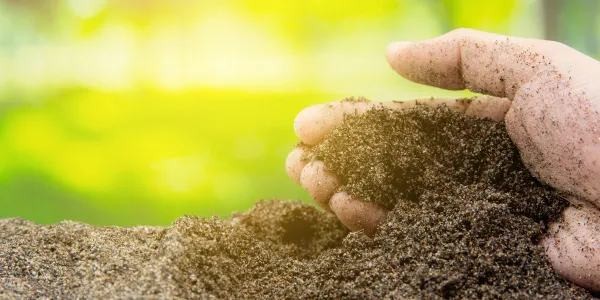
By incorporating EF Polymer, the soil inside the walls expanded and adhered more closely to the seed paper, reducing dryness and helping roots establish more easily. Even under extreme heat, it played a vital role in improving germination rates.
Before the Expo, EF Polymer was also tested in a lawn greening system known as “Honeycomb Green,” introduced through Takenaka’s internal collaboration hub, COT Lab Otemachi.
In early 2025, experiments were conducted in a greenhouse in Kasumigaura City, Ibaraki Prefecture. Winter and summer grasses were planted in plots with and without EF Polymer. The results were clear: plots containing EF Polymer showed faster initial growth and maintained greenery longer under dry conditions.
“If grass that would normally die in three days can survive for four or five, those few extra days make a huge difference in real world maintenance,” Tsuchio emphasizes.
Additional prototype tests under varying temperature and humidity conditions also confirmed improved moisture retention, with winter grass remaining healthy for approximately two extra days.
Despite the harsh, sun exposed conditions of the Expo site, visitors were able to witness plants sprouting directly from the structure.
Comments included:
“What mattered most was that visitors didn’t see a failed or withered structure,” Tsuchio reflects.
“They saw the beginning of a forest. We were able to present a new value—architecture that continues to grow after completion.”
The project attracted attention from architects in Japan and abroad and was featured in international media. After the Expo, the structure will be relocated to a Takenaka training facility for longterm observation.
“I look forward to seeing what kind of forest it becomes by the time I retire,” Tsuchio says.
“I hope architecture can evolve from something that separates people from nature into something that reconnects them.”
Tsuchio sees EF Polymer as more than a construction material.
“It’s simple, easy to handle on site, and environmentally safe. It could be valuable for landscaping, urban greening, and even largescale tree transplantation,” he says.
“It may also help green areas affected by increasingly severe climate conditions.”
Potential applications include street trees, rooftop gardens, and temporary green installations, where reducing irrigation frequency can significantly lower maintenance burdens.
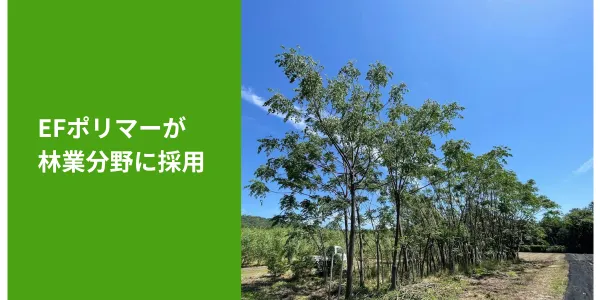
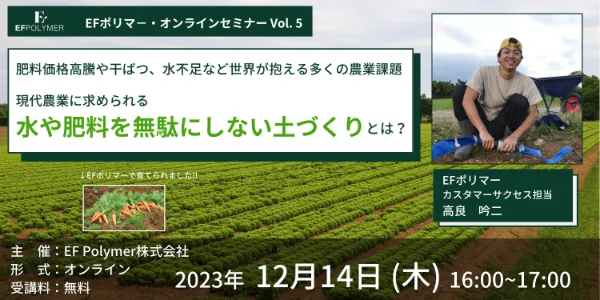
EF Polymer is already being used in droughtprone agricultural regions in India and Africa, in reforestation projects in Senegal, and in farmland recovery efforts in Ukraine demonstrating its potential beyond architecture.
“Architecture That Becomes a Forest” began as a bold idea from young architects and became reality through collaboration across disciplines and with startups.
At the heart of this project was EF Polymer,a fully biodegradable, plant based material that stores water, supports germination, and ultimately returns to nature.
The small patches of green that emerged at Yumeshima will one day grow into a forest, passing their story on to future generations. In doing so, the collaboration between Takenaka Corporation and EF Polymer has clearly pointed toward a new possibility for architecture.